Dobby & jacquard design — done for you

Designs that actually weave.

Woven structures drawn as a weave draft, not a picture of fabric — point paper, construction spec, float check and colourways, loom-ready.

Fixed quote in 24h Float check, documented Dobby or jacquard, told straight
Structure Twill 3/1 · draft and cloth Example
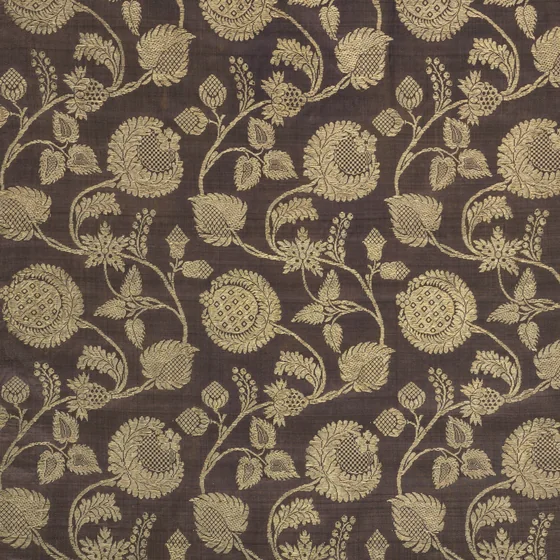
Reference cloth · licensed photograph
24 ends × 32 picks EPI 96PPI 72Ne 40/2 8 shafts — runs on dobby

Warp beamed. From here, a change of warp costs a warp — a change of weft costs a cone.

01 — How it works

Idea to loom, in four steps.

You approve a woven simulation, not a flat picture — structure and colour together, before yarn is committed.

Brief

Send references, the end use, and your loom details if you have them — or introduce us to your mill and we will ask.

Fixed quote in 24h

One number covering the draft, construction spec, simulation and colourways.

Design + simulation review

You approve the woven simulation — structure and colour, not just artwork. Two rounds included.

Loom-ready handoff

Point paper, spec sheet, colourways and files for your mill’s software — ownership transferred.

02 — What you get

Not a pretty JPEG. A weaving instruction.

A mill cannot weave a picture. It weaves a draft, a construction and a repeat that fits the loom in front of it.

01Point-paper weave draftThe design on point paper — every intersection decided, ready for the loom software.
02Construction specEPI, PPI, yarn counts and weave structure per area — the sheet your weaver reads first.
03Repeat sized to your loomBuilt to your hook count or shaft count — no stretching, no cropping at the mill.
04Woven simulationSee structure, floats and colour mixing before a single pick is thrown.
05Float check, documentedMaximum float lengths verified per structure — the snag test happens on paper, not in wear.
06Warp & weft colourwaysVariants engineered for weft-change economics — more range, fewer warps.
07Blanket layout on requestMultiple colourways arranged for a single sampling run.
08Exclusive ownershipFull rights transfer on final payment — never resold, never re-coloured for anyone else.
09Two revision roundsStructure, colour and motif adjustments — most designs approved in round one.
03 — Which loom

Dobby or jacquard — we tell you straight.

It is not a style choice. It is who controls the warp: a shaft that moves a whole group of ends, or a hook that moves one.

Group controlDobby

Ends are threaded onto shafts, and a shaft lifts every end on it together. Eight to thirty-two shafts is typical — that count is the ceiling.

  • Twills, satins, waffle, piqué, bedford cord, small geometrics
  • Stripes and checks built from a handful of end groups
  • Cheapest to set up, and most mills in the cluster have one

End-by-end controlJacquard

Every end hangs on its own hook, so no two ends need agree. The limit is hook count and repeat width, not shafts.

  • Damask, large florals, figures, borders, logos
  • Structures used as a palette — satin catches light where twill holds shadow
  • Costlier to set, so the design should earn the loom

The test we apply: if two ends side by side must behave differently, no number of shafts will do it — that is jacquard. If a few repeating end groups can build it, it belongs on a dobby, and we will say so.

04 — Colourway economics

Change the weft, not the warp.

Swapping a weft cone takes minutes. Re-beaming a warp takes a day and a bill, so the range should come out of the weft wherever it can.

Swapping weft yarns between colourways is quick and cheap. Re-beaming a warp is neither. So the range is engineered to come out of weft changes — and when a colourway truly needs its own warp, we flag it before you commit.

Warp-way stripes are the exception. A stripe running down the cloth lives in the warp, so changing it means a new beam. We tell you which colourways share one.

Navy weft
Claret weft
Forest weft
Ochre weft
05 — Structure vocabulary

The structures your mill already trusts.

In a jacquard these are the palette: satin catches the light where twill holds shadow, and that contrast is the design.

PlainOver one, under one — the tightest, flattest cloth there is.
Twill 2/1A diagonal made by stepping the lift one end each pick.
Twill 3/1Warp-faced: three over, one under. Denim’s structure.
HerringboneA twill that reverses direction and mirrors the diagonal.
Satin 5One bind in five, scattered — floats give it the shine.
WaffleRidges and hollows from floats of increasing length.
PiquéFine ribs held by stitching ends into a backing.
Double clothTwo cloths woven at once and tied where the design says.
Damask cloth, woven with the figure in satin against a twill ground
Reference cloth · a figure carried by satin against twill
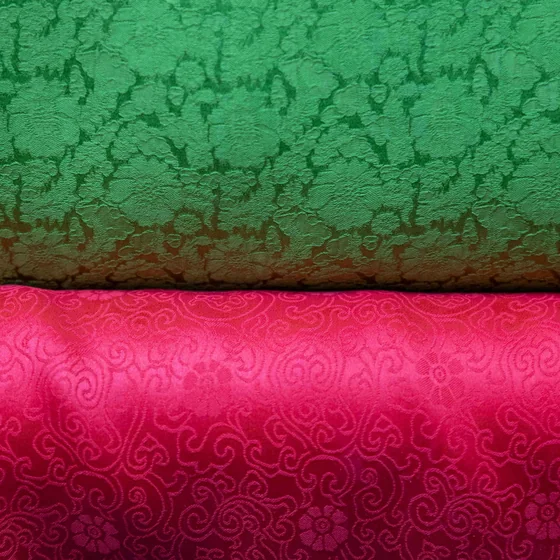
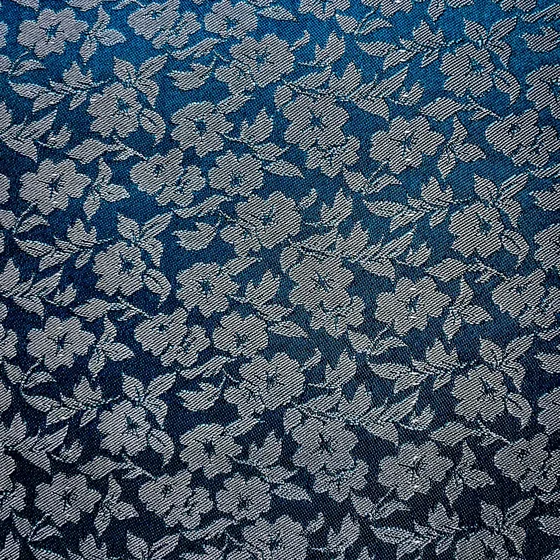
Two woven swatches in different colourways and motifs
Reference cloth · colour changes what a structure reads as
06 — Inside the work

From your drawing to a file the loom accepts.

Eleven stages, in this order. The four in colour are the ones that decide whether the cloth can be woven at all.

01
Customer designYour artwork, reference cloth or a photograph of something you liked — whatever you have.
02
Point paper / weave draftThe design redrawn as a grid: one square per end and pick, every intersection decided.
03
Warp × weft interlacementWhich end lifts over which pick — the actual cloth logic, not a picture of it.
04
Dobby or jacquard decisionGroup control on shafts, or every end on its own hook. This sets everything after it.
05
Draft + lifting planWhich end goes on which shaft, and the order the shafts lift, pick by pick.
06
Warp & weft colour planColour order in the beam and in the shuttle — the plan that makes colourways cheap.
07
Denting / reed planEnds per dent and reed number: the density the cloth is actually set at.
08
Float analysisEvery unbound run measured down the ends. Long floats get stitch points before they snag.
09
Repeat / width validationThe repeat checked against hook or shaft count and the finished cloth width.
10
Production specificationEPI, PPI, counts, structures per area, finish — the sheet the weaver works from.
11
Loom-ready outputFiles in the format your mill’s software reads, plus the spec, plus ownership.
Questions

Asked before every warp.

A weavable design. You get the point-paper weave draft, the construction spec (EPI, PPI, yarn counts, weave structures per area), the repeat sized to your loom's hook count or shaft count, and a woven simulation so you can approve the look before yarn is committed. An image is the starting point; the weaving instruction is the deliverable.

No — that's our first job. Small geometric textures with a limited repeat usually run on dobby; pictorial, large-repeat or multi-structure designs need jacquard. We'll tell you which your idea needs, and if the cheaper loom can do it, we'll say so.

Yes. Tell us the loom's hook count (jacquard) or number of shafts (dobby), reed and pick density, and yarn library — or introduce us to your mill and we'll take those details directly. The repeat is built to those numbers, not adapted afterwards.

Included — and engineered honestly. Weft colorway changes are cheap at the mill; warp changes are not. We design the colorways so as many variants as possible come from weft changes only, and we'll flag any that would force a new warp.

You review a woven simulation that shows the structure, not just the artwork — floats, texture and colour mixing included. Two revision rounds are built in. Mills can also request a blanket layout for sampling multiple colorways in one run.

You do — mill or brand, whoever commissions it. Full rights transfer on final payment, the design is never resold or re-coloured for anyone else, and we don't show it publicly without your written OK.

Would you rather hire one person? Our studio draws weave structures end to end — or you can brief an approved Dobby & Jacquard specialist directly from our curated network.

Find a Dobby & Jacquard specialist
Get your quote

Send the idea. Get something the loom can weave.

Tell us the end use and your loom, if you know it — fixed quote within 24 hours.